
How oxygen nanobubbles help support healthier-looking skin
This study looked at whether delivering oxygen to the skin using oxygen nanobubble technology from AO2 SKIN can improve skin function without damaging or disrupting the skin barrier.
What is HIF-1α and why does it matter?
Your skin naturally has different oxygen levels at different depths. One important marker, called Hypoxia Inducible Factor-1 alpha (HIF-1α), helps scientists understand how much oxygen is available in the skin. When oxygen levels increase, this marker goes down.
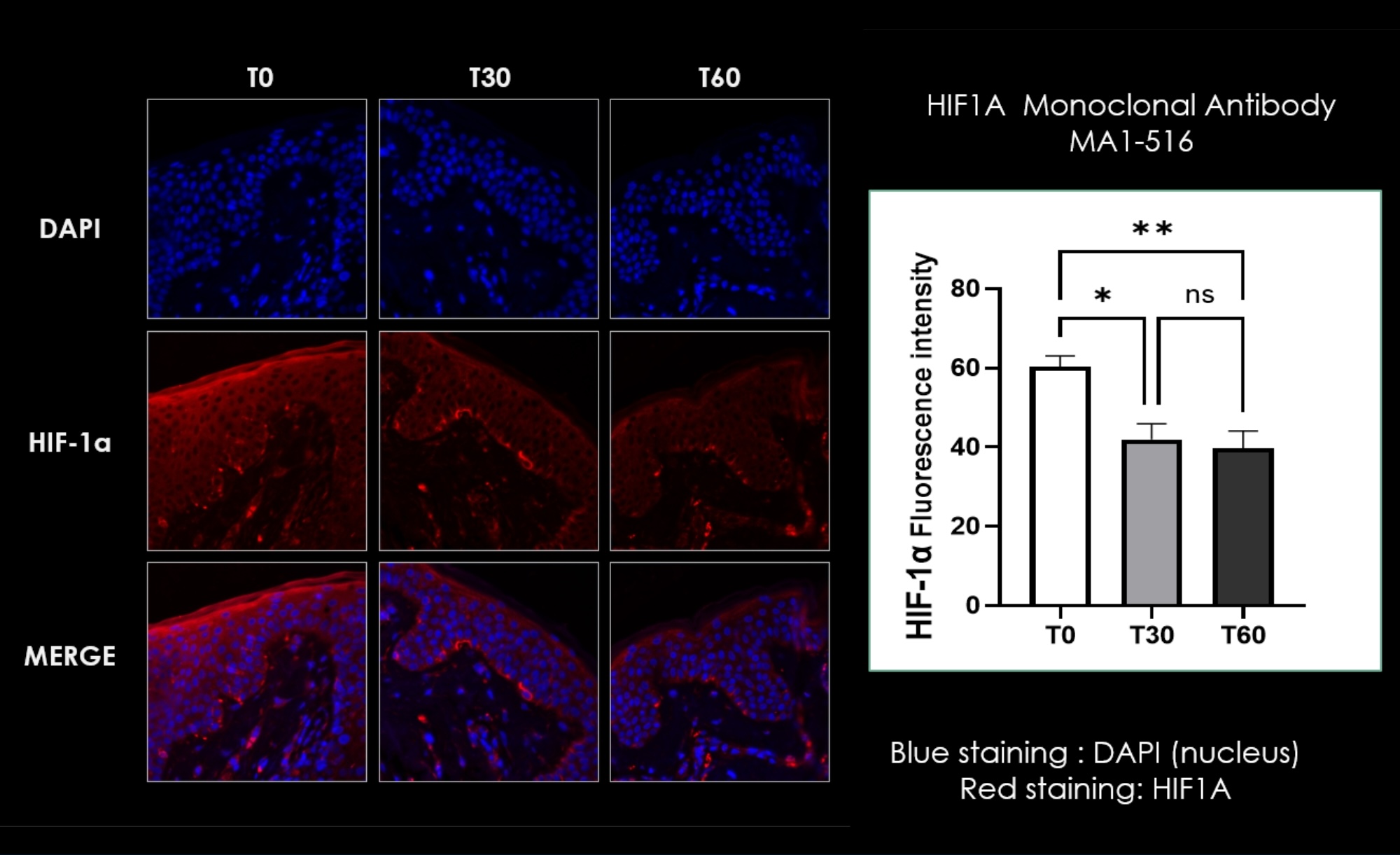
In this study, participants applied oxygen nanobubbles of AO2 CLEAR to their skin. Small skin samples were taken before use, and again after 30 and 60 minutes. The results showed a clear decrease in HIF-1α, which means oxygen availability in the skin had improved dramatically.
Study timepoints
Your skin barrier stays protected
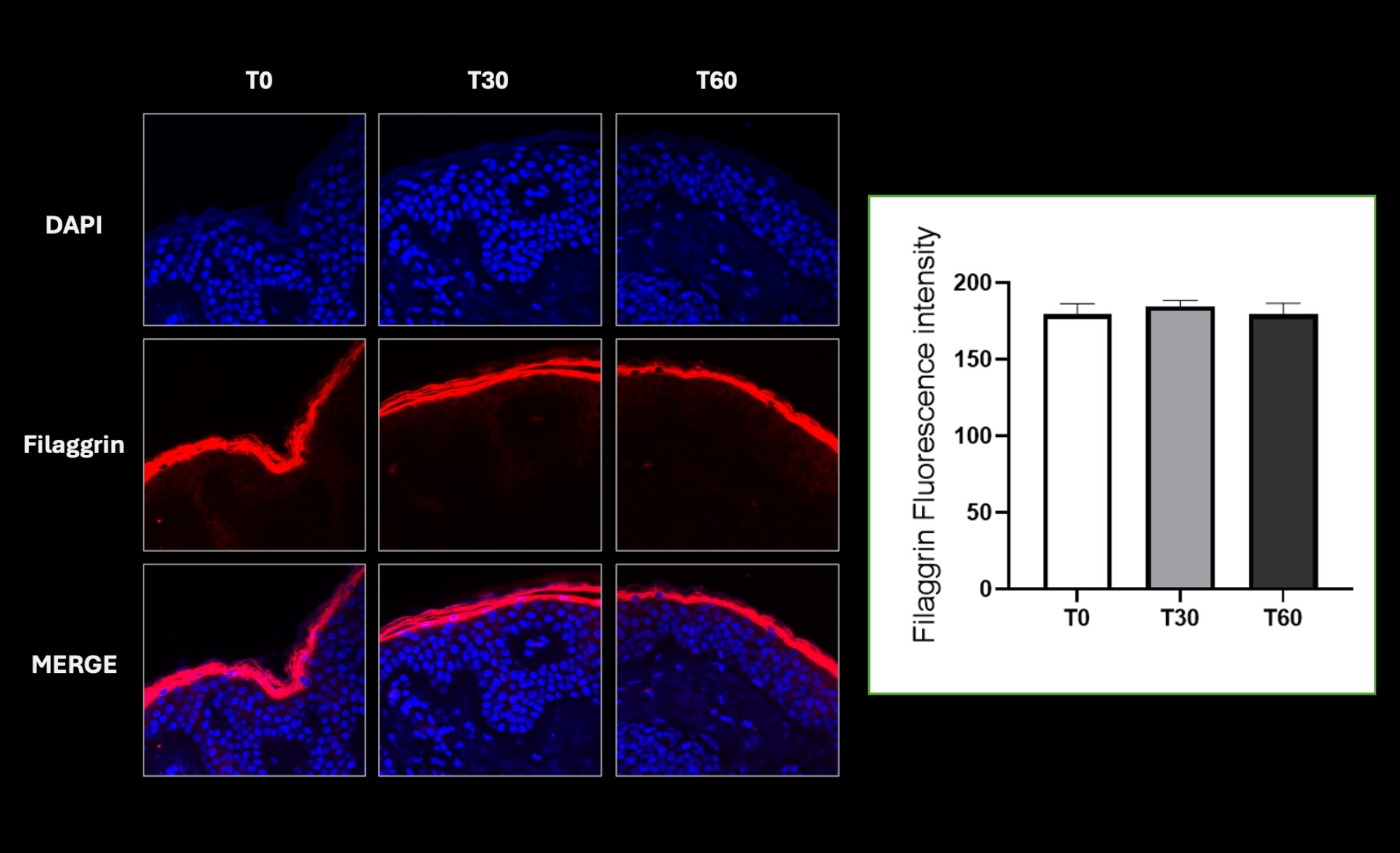
Just as important, the skin itself remained intact. There were no detectable changes to skin structure or barrier integrity. Instead, the skin showed signs of a healthy, adaptive response, which is associated with stronger, more resilient skin over time.
What this means for your skin
Supports better oxygen availability at the pore and follicle level
Helps create a healthier environment for skin function
Maintains skin barrier integrity
Encourages a more balanced, resilient complexion
This research supports how oxygen nanobubble technology from AO2 SKIN works to improve overall skin health in a gentle, non-disruptive way.
Seeing the science
Immunofluorescence microscopy images from the study, showing changes across the three measurement points.
O₂ nanobubbles improve transcutaneous oxygenation without alteration to skin integrity
Abstract
This study aimed to evaluate whether topical delivery of oxygen nanobubbles (O₂ NB) from AO2 SKIN enhances oxygen availability in human skin tissue without compromising epidermal integrity.
Human skin is characterized by physiological oxygen gradients, with Hypoxia Inducible Factor-1 alpha (HIF-1α) serving as a central regulator of cellular response to oxygen availability. A reduction in HIF-1α expression is indicative of increased tissue oxygenation.
In this study, human skin biopsies were obtained from five volunteers following topical application of oxygen nanobubbles (AO2 CLEAR). Samples were collected at baseline, 30 minutes, and 60 minutes post-application. Immunofluorescence analysis was performed to quantify HIF-1α expression.
Results demonstrated a statistically significant reduction in HIF-1α levels following topical O₂ NB delivery, supporting improved transcutaneous oxygen availability.
In addition to oxygenation effects, analysis of five supplementary biomarkers indicated that O₂ NB exposure did not produce detectable structural alterations in epidermal integrity. Instead, findings suggest activation of a beneficial adaptive response consistent with physiological skin stress modulation.
These results support a dual mechanism of action: enhanced tissue oxygenation alongside adaptive cellular responses, contributing to improved skin resilience. This provides a scientific basis for the use of oxygen nanobubble technology in topical skincare applications.
Study design
Collection timepoints
Analysis method
Immunofluorescence analysis was conducted by an independent academic institution in the United States. Findings are scheduled for presentation at a dermatology-focused scientific conference and submission for publication.
Dual mechanism of action
Enhanced transcutaneous oxygenation
Statistically significant reduction in HIF-1α levels post-application
Preserved epidermal integrity
No detectable structural alterations in skin barrier markers
Adaptive cellular response
Activation of physiological skin stress modulation pathways
Improved skin resilience
Results support use in topical skincare applications
Research images
Immunofluorescence staining performed at T0, T30, and T60 following topical application of AO2 CLEAR oxygen nanobubbles.
Research integrity
Immunofluorescence analysis was conducted by an independent academic institution in the United States. Findings are scheduled for presentation at a dermatology-focused scientific conference and submission for publication.